

PRACTICAL GUIDE
Mountain safety
Weather, storms, guiding: the reflexes to adopt before every outing.
The Hautes-Alpes mountains are generous, but they require preparation. The advice below draws on guidance from the gendarmes of the Briançon high-mountain gendarmerie unit (PGHM), Météo-France and the Écrins National Park. It does not replace a qualified professional, whom we recommend for any activity you have not mastered.
Emergency numbers
- 112: European emergency number, reachable from any phone.
- 15: medical emergencies (SAMU). 18: fire brigade. 17: police and gendarmerie.
In the mountains, rescues in the département are carried out by the Briançon PGHM, in rotation with the CRS police mountain units. Before setting off, note your route and tell someone when you expect to be back.
Before you go
- Check Météo-France's mountain forecast the day before and on the morning itself.
- Choose a route suited to the whole group: distance, ascent, ground conditions, weather.
- Keep a margin: be ready to turn back, and assess your ability to get down before climbing higher.
- Use professionals to discover an activity: high-mountain guides, mountain leaders, instructors. The département's guides' offices are listed in our Directory.
Summer: hiking, mountaineering and huts
In high summer, storms often break in the afternoon: set off early. Book huts: it is often mandatory when they are wardened. Beyond the trails, glaciers require specific equipment and skills: access to the Refuge des Écrins, for example, crosses the Glacier Blanc and requires crampons, harness and rope.
Also check access conditions. Since the floods of 27 and 28 August 2026, the road from Ailefroide to the Pré de Madame Carle has been cut indefinitely, and the Glacier Blanc and Écrins huts are reached by modified routes: contact the wardens before setting off. In the Champoléon valley, the left-bank track to the Refuge de Pré la Chaumette has been impassable since rockfalls: use the right-bank path.
Winter: snow and avalanches
- Check Météo-France's avalanche risk bulletin (BRA) every day. It rates the risk from 1 to 5, by massif and slope aspect.
- Off marked runs, carry the safety trio: avalanche transceiver, shovel and probe, and know how to use them. An airbag pack is a useful addition.
- Watch for warning signs: recent avalanche debris, muffled "whumpf" sounds under your skis, a sign of a weak snowpack.
- Wear a helmet, on the slopes as when touring, and follow the skier's code of conduct.
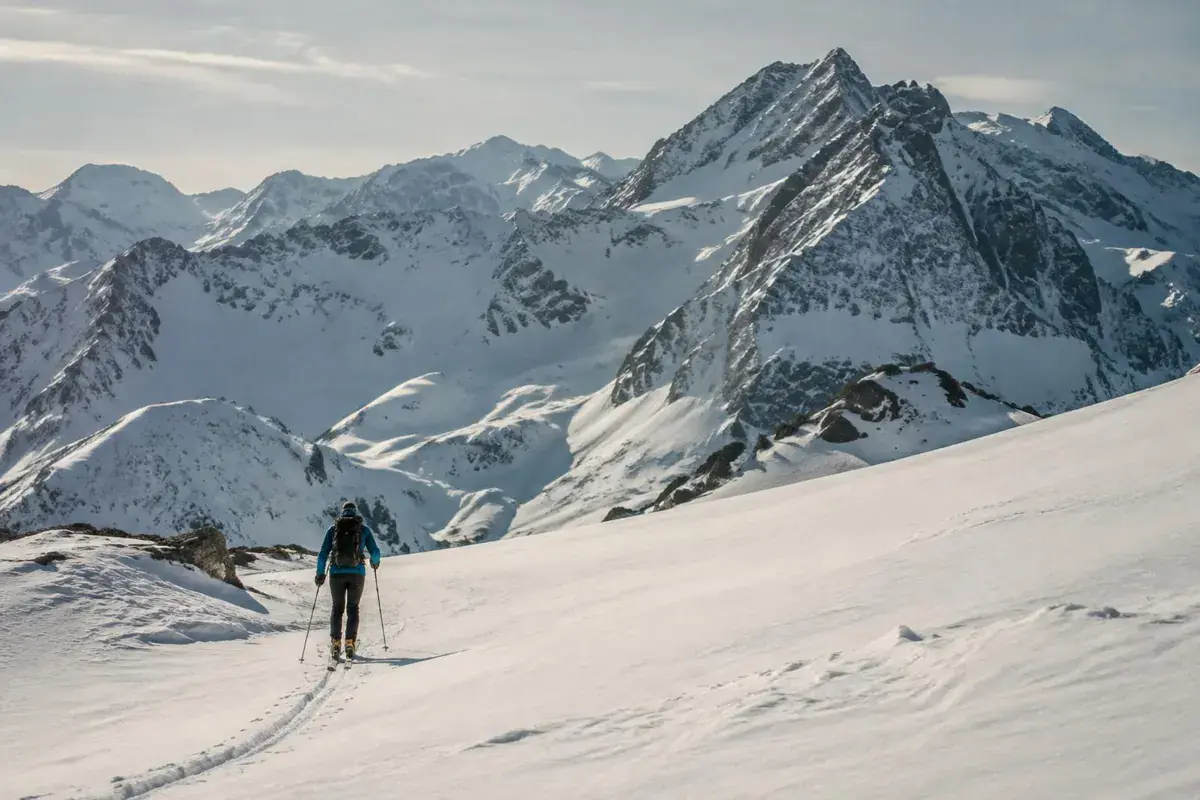
To try ski touring, off-piste or snowshoeing, go with a guide, mountain leader or instructor.
In the Écrins National Park
The core of the National Park has its own rules. Prohibited there are: dogs, even on a lead; fires; picking and collecting (plants, animals, minerals); drones; mountain biking, except where signposted; camping.
Bivouacking is still allowed under an order of 16 June 2026: pitch after 7pm and strike before 9am, one night only in the same place, more than an hour's walk from the boundaries of the core and from roads and car parks, with a small tent you cannot stand up in. Only gas stoves are allowed for cooking.
On the water: rafting, canyoning and the lake
Choose a base run by qualified professionals. Being able to swim is generally required, and each activity has a minimum age (often 6 to 8 for rafting, older for canoe-raft or air-boat). Follow the instructor's instructions and keep the buoyancy aid and helmet on for the whole run.
Sources
- Advice from the Briançon PGHM gendarmes for winter sports (Gendinfo, French Ministry of the Interior)
- The PGHM in the mountains (Gendinfo, French Ministry of the Interior)
- Order on bivouacking in the core of the Écrins National Park (Écrins National Park)
- The Écrins National Park, a regulated gem (FFRandonnée)
- Météo-France
- Écrins National Park