

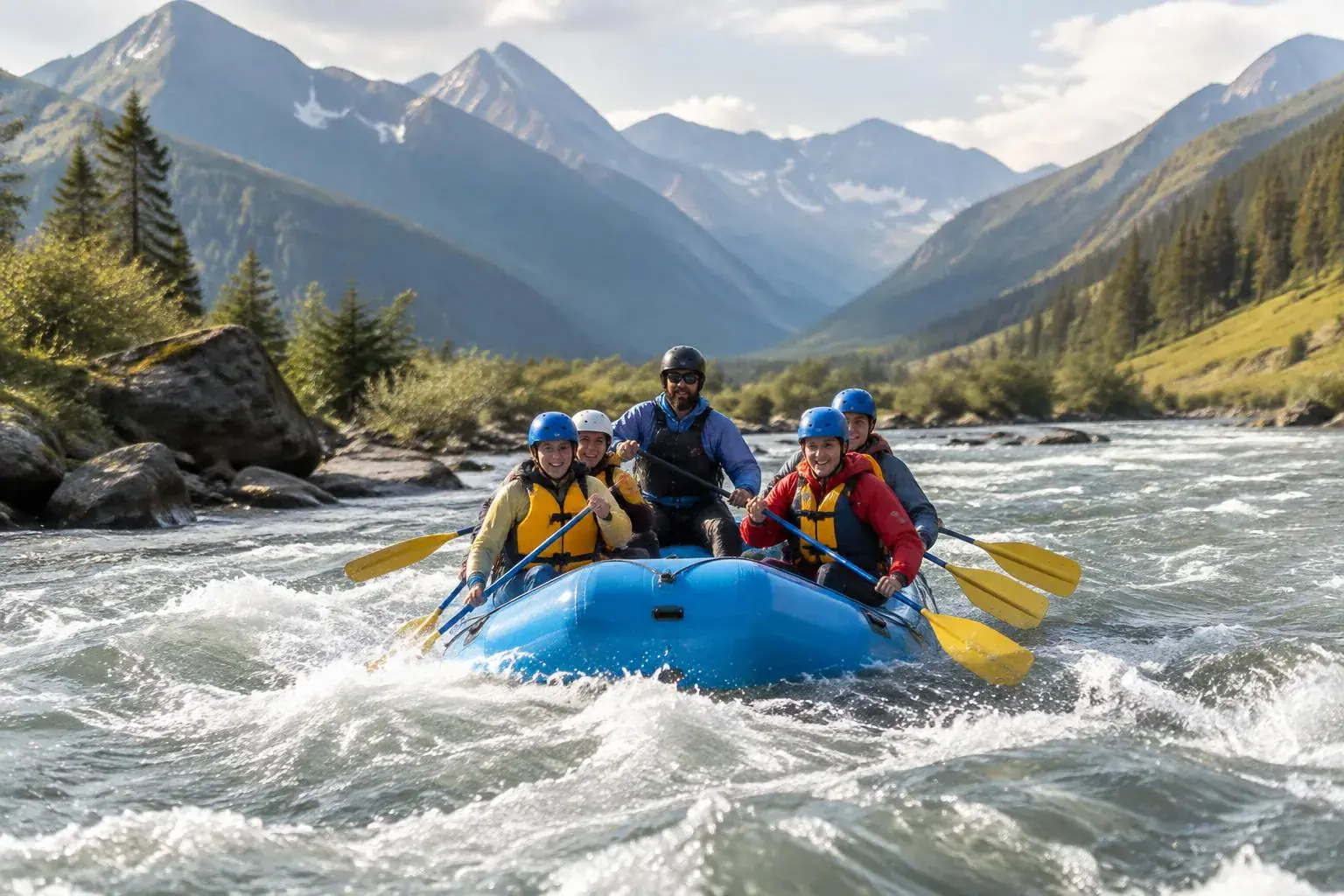
Rafting: picking the right season and the right run
Water flow, temperature, required level: our pointers for a successful first run.
Choose a run that suits you
When discovering rafting, start with your confidence in water and what you want from the outing rather than a dramatic photograph. A river requires attention even when a trip is described as accessible. Talk to a qualified professional about your experience, concerns and companions. The aim is to choose a suitable option for the group, not automatically the run that appears most demanding. Be honest about unfamiliar situations so the discussion reflects your needs rather than an image of how adventurous you should be.
Understand the current conditions
A river behaves differently as conditions change. Water flow, water temperature and the weather affect both the experience and the demands of a run. A friend’s account is therefore not enough to predict your own outing. Ask what conditions are expected and how they influence route selection. If the situation changes, accept an adjustment or postponement recommended for safety. Treat that decision as part of a responsible outing rather than a disappointing exception.
The season alone offers no guarantee. Before booking, check that the proposed trip takes account of your ability and the conditions actually being encountered. Ask practical questions: how does preparation work, what equipment is provided, and which instructions should you understand? Clear answers help you make a decision without turning general information into your own technical assessment of the river. That assessment belongs to competent supervision on the spot, informed by the situation at the time.
Prepare to take part
Choose clothing according to the advice you receive and mention any discomfort while getting equipped. A helmet or buoyancy aid that feels wrong should be checked before departure. Listen to the explanation of movements and instructions even if you have rafted elsewhere. The group’s way of working and the guide’s directions take precedence over your previous habits. If you do not understand an instruction, ask for clarification before entering the water. There is no benefit in pretending you have understood.
- Describe your concerns without playing them down.
- Check the recommendations for your clothing.
- Give the preparation briefing your full attention.
- Respect the guide’s decisions about the run.
Practical information
Confirm participation requirements, necessary equipment and possible adjustments directly with the supervising team. General advice cannot replace that conversation.
Work with the group
During the run, aim for coordination rather than individual performance. Pay attention to instructions and your companions’ comfort. Mention uncertainty or fatigue before it affects your participation. Afterwards, consider what helped you feel comfortable and what still needs practice. Your experience can inform the choice of a future run, while remembering that conditions and routes may change. Growing confidence should support better questions, not an assumption that every river will feel familiar.
Further reading

Cycling & mountain biking
Hautes-Alpes: Granon and Orpierre, 19–25 October
Cycle the Granon on Thursday 22 October or visit Orpierre’s traditional fruit market on Saturday 24: two confirmed events to plan a Hautes-Alpes outing without crossing the whole department.

Hiking & trail running
Packing your bag for a day in the mountains
Layers, water, first-aid kit, map: our checklist, season by season.